Can We Use Magnets to Generate Electricity? A Magnetic Marvel!
Published: November 30, 2025 | Updated: May 22, 2026
Howdy, folks! Today, I reckon we're diving into a topic that's just as fascinating as a two-headed calf at the county fair: magnets and electricity. Y'see, the idea of using magnets to generate electricity has been turning heads and raising eyebrows for years. But is it just another tall tale, or is there some spark of truth to it? Well, saddle up, 'cause we're about to unravel the magnetic mysteries and find out if magnets can indeed wrangle us some electricity!
Magnets: Nature's Little Wonders
Before we gallop off into the world of magnetic electricity generation, let's tip our hats to magnets themselves. These little buggers are downright magical. They come in all shapes and sizes, from tiny fridge magnets to massive neodymium monsters that could pull nails from across the room.
But what's most incredible is their ability to attract and repel things without breaking a sweat. That's due to their North and South Poles, where all the action happens. When you put two magnets together, the North Pole of one will cozy up to the South Pole of the other like old friends at a barn dance. But try to match up North with North, and it's a different story—they'll act like two ornery cowpokes in a showdown, pushing each other away faster than you can say “magnetic mayhem.”
Faraday's Fantastic Discovery
A feller named Michael Faraday, a British scientist from the 1800s, rustled up one of the most significant discoveries in this neck of the woods. Ol' Faraday showed us that when you wave a magnet near a coil of wire, it can stir up some electric current like a lasso 'round a calf's horns.
You see, it's all about that magnetic flux, which sounds fancier than a Sunday best suit but is pretty simple. When a magnet moves near a wire, it causes the electrons in the wire to start a-dancin'. This wigglin' and jigglin' of electrons is what we call electricity!
Generators: Roundin' Up Electricity
Now, let's mosey on over to the heart of the matter: generators. These gizmos are like the ranchers of the electricity world, wrangling up that wild electricity and making it behave.
How Generators Work
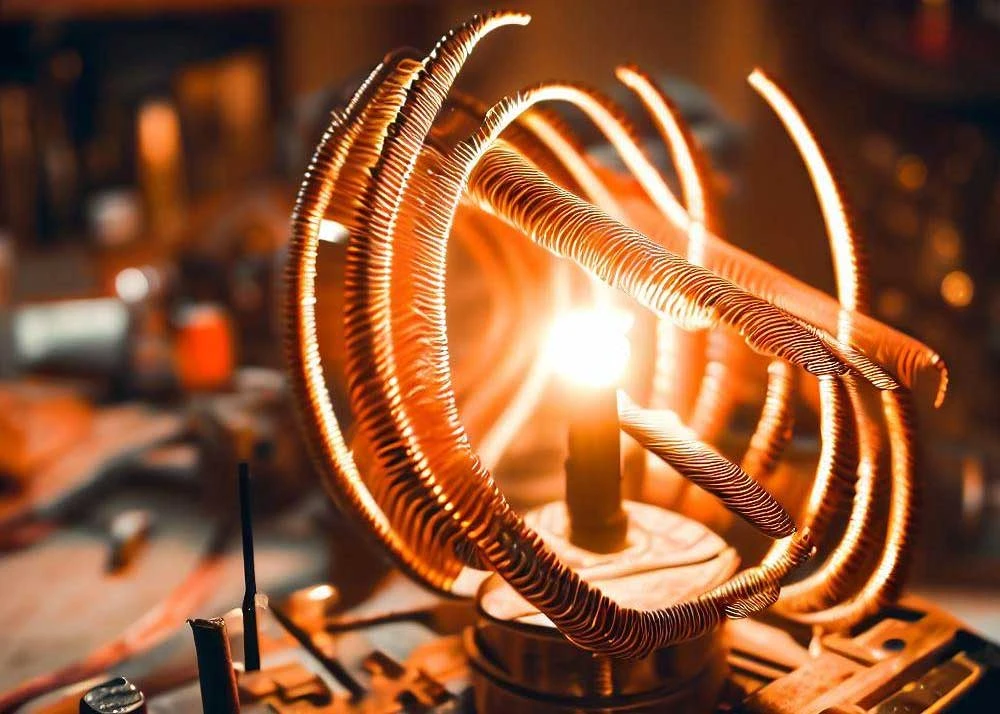
Generators are built with coils of wire and—yup, you guessed it—magnets! When you spin a magnet close to these coils, you're stirring up the electrons in those wires, just like a cattle stampede. And voila! You've got yourself a current of electricity.
Imagine you're whirlin' a lariat 'round your head. The faster you spin it, the more rope you send flyin'. Well, generators work the same way. The faster you spin that magnet near the coils, the more electricity you round up. It's like a mechanical rodeo for electrons!
Types of Generators
Now, there's more than one way to skin a cat, as they say, and the same goes for generators. You've got your good ol' hand-cranked generators, your wind turbines, and even those big power plants with turbines the size of a steer's head.
Wind turbines are some of the slickest gadgets around. When the wind blows, it spins the turbine's blades, which, in turn, spin a magnet near a bunch of coils. It's like a good ol' windmill on steroids! These turbines are the cowboys of clean energy, wrangling up electricity from Mother Nature herself.
Horsepower and Megawatts
Now, you might be wonderin', “How much electricity can we wrangle from magnets?” Well, partner, it depends on the size of your magnets and how fast you're spinnin' 'em.
For small-scale setups, like those hand-cranked gizmos, you'll get a trickle of electricity—just enough to light up a lantern or charge your gadgets in a pinch. But if you're talkin' about them big, industrial generators, we're talkin' megawatts of power—enough to light up a whole dang town!
The Maglev Marvel
If we're talkin' magnets and electricity, we can't leave out the maglev trains! These futuristic contraptions use magnets to float above the tracks, gliding along with hardly a whisper. But here's the kicker—they also use magnets to generate electricity.
When these maglev trains slow down, they ain't just coastin' to a stop. Nope, they're turning their magnetic magic into electricity. You see, the train's movement generates magnetic fields, which, in turn, create an electric current. It's like getting double the bang for your buck!

The Future of Magnetic Electricity
Now that we've roped in some magnetic electricity, what's next? Well, the future looks brighter than a starry night on the prairie. Researchers are rustling up new ways to use magnets and generate electricity more efficiently.
There's talk of using super-strong magnets to squeeze even more electricity out of the wire wranglers. And who knows, maybe one day we'll have our very own magnetic generators right in our homes, powering our lights and gadgets.
Wrapping It Up
So, can we use magnets to generate electricity? You bet your boots we can! From Faraday's groundbreaking discoveries to the high-tech maglev trains of today, magnets and electricity have been doing the two-step for centuries.
It's a wild, magnetic world out there, folks. So, the next time you're stuck on a long, dusty trail with a dead flashlight, remember that with the right magnets and a little know-how, you can rustle up some electricity and light up the night. Until next time, keep your magnets close and your ideas even closer—there's no tellin' what magnetic marvels await!