Tesla Magnetic Generator for Cabin: Off-Grid Power Guide (2026)
Published: December 7, 2025 | Updated: May 22, 2026
A Tesla magnetic generator is one of the most practical power solutions for off-grid cabins. Whether you're building a weekend retreat or a full-time cabin home, a magnetic generator provides reliable, silent power that doesn't depend on weather or fuel supply.
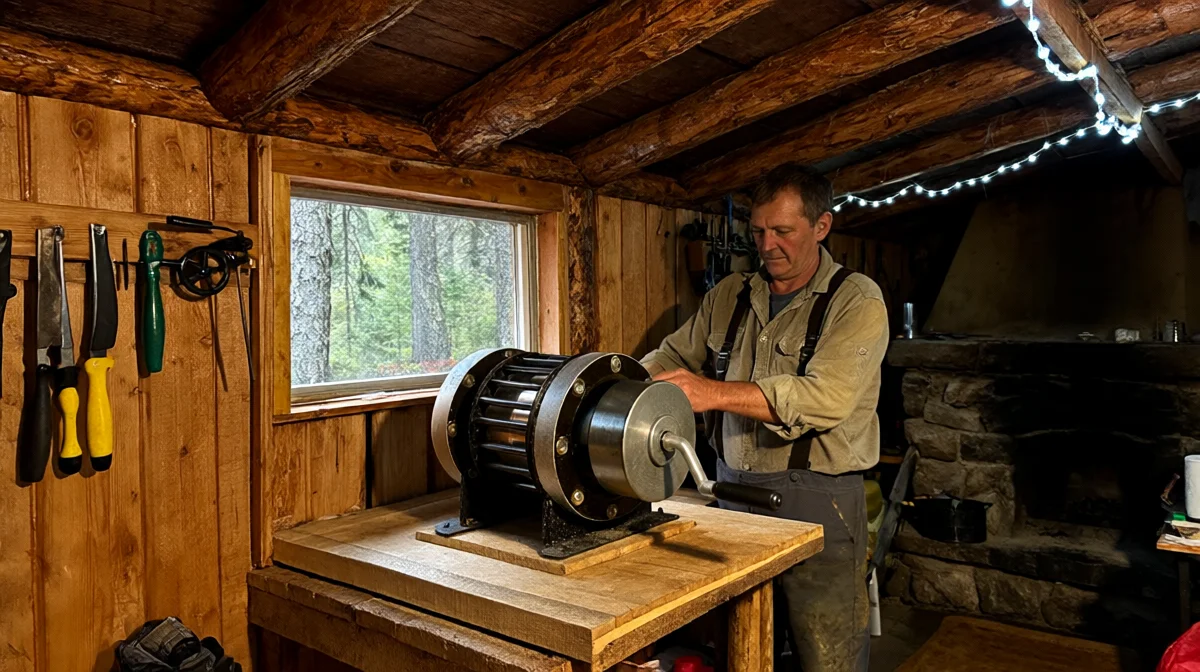
Why a Magnetic Generator for Your Cabin?
Cabin owners face unique power challenges:
- Remote locations may not have grid access
- Weather can limit solar output (cloudy forests, short winter days)
- Fuel delivery can be expensive or difficult
- Noise matters in peaceful cabin settings
A Tesla magnetic generator addresses all of these concerns.
Power Needs for a Typical Cabin
| Appliance | Watts | Hours/Day | Daily kWh |
|---|---|---|---|
| LED lighting | 20W | 6 hours | 0.12 |
| Refrigerator | 75W | 12 hours | 0.90 |
| Phone/laptop charging | 30W | 3 hours | 0.09 |
| Water pump | 200W | 1 hour | 0.20 |
| TV/entertainment | 60W | 3 hours | 0.18 |
| Total | 1.49 kWh |
A professional-grade magnetic generator (500W-2kW) with a wind or water prime mover can produce 3-15 kWh per day, enough to cover most cabin needs.
Best Prime Movers for Cabins
1. Water-Driven (Best for Cabins Near Streams)
- Setup: Small water wheel or turbine in nearby stream
- Output: 300-1,000W (depends on flow rate)
- Advantages: Most consistent year-round power, 24/7 operation
- Cost: $50-$200 for a simple water wheel
2. Wind-Driven (Best for Open/High-Elevation Cabins)
- Setup: Small wind turbine mounted on pole near cabin
- Output: 200-600W in moderate wind (10-20 mph)
- Advantages: Free power, no fuel, minimal maintenance
- Cost: $100-$300 for a small turbine
3. Hybrid (Water + Wind)
- Setup: Both water wheel and wind turbine drive the same generator
- Output: 400-1,200W combined
- Advantages: Most reliable, if one source is weak, the other compensates
- Cost: $150-$400
Cabin Generator Setup Example
Budget Cabin Setup ($200-$400)
- Magnetic generator (mid-range): $100-$200
- Water wheel prime mover: $50-$100
- 12V battery bank (100Ah): $80-$150
- Charge controller: $15-$30
- Total: $245-$480
Premium Cabin Setup ($500-$1,000)
- Professional magnetic generator: $300-$500
- Wind turbine prime mover: $150-$300
- Lithium battery bank (200Ah): $200-$400
- MPPT charge controller: $40-$80
- Inverter (500W): $60-$120
- Total: $750-$1,400
Installation Tips
- Locate near your prime mover, Minimize shaft length to reduce power loss
- Weatherproof the generator, Use a sealed enclosure for outdoor installation
- Mount on vibration pads, Prevents noise transmission to cabin structure
- Wire to a distribution panel, Use standard RV or cabin electrical panel
- Add a battery bank, Stores excess power for low-output periods
Maintenance for Cabin Generators
- Monthly: Check belt tension (if belt-driven), inspect bearings
- Seasonally: Clean wind turbine blades, check water wheel for debris
- Annually: Lubricate bearings, inspect wiring, test output voltage
- Every 5 years: Consider bearing replacement
Real Cabin Owner Experience
A cabin owner in the Pacific Northwest reported:
- Setup: Water-driven magnetic generator + 200Ah lithium battery
- Daily production: 4-8 kWh on average
- Winter production: 2-4 kWh (lower water flow, shorter days)
- Summer production: 6-12 kWh (strong flow, longer days)
- Monthly savings: $80-$150 vs. propane generator
- Payback: 2-3 years vs. propane system
Bottom Line
A Tesla magnetic generator is an excellent choice for cabin power, especially when driven by a water wheel or wind turbine. For $200-$1,000, you can build a system that produces 3-15 kWh per day, enough to power lights, refrigeration, and electronics in a typical cabin.
The combination of silent operation, minimal maintenance, and weather-independent power makes it superior to both propane generators and solar-only systems for remote cabin locations.
Cabin Power Scenarios
Cabin Power Scenarios
Different cabin setups have different power needs. Here are three common scenarios:
Scenario A: Weekend Cabin (Minimal)
- Occupancy: 2 people, 2-3 nights/week
- Needs: LED lights, phone charging, small fridge
- Daily power: 0.5-1.0 kWh
- Generator size: 100-200W
- Build cost: $40-100
- Solution: Small wind-driven or hand-cranked generator
Scenario B: Full-Time Cabin (Moderate)
- Occupancy: 1-2 people, year-round
- Needs: LED lights, fridge, laptop, water pump, TV
- Daily power: 2-4 kWh
- Generator size: 300-500W
- Build cost: $150-400
- Solution: Wind-driven or water-driven generator with battery bank
Scenario C: Family Cabin (Substantial)
- Occupancy: 4+ people, year-round
- Needs: LED lights, full-size fridge, microwave, laptop, TV, well pump
- Daily power: 5-8 kWh
- Generator size: 500W-1kW (or multiple generators)
- Build cost: $300-1,000
- Solution: Hybrid system, magnetic generator + solar panels
Pro tip: Most cabins start at Scenario A and upgrade over time. Build a basic generator first, then expand as your needs grow.
Seasonal Power Management
Seasonal Power Management
Cabin power needs change dramatically with the seasons. Here's how to manage:
Winter (Highest Demand)
- Challenge: Shorter days, more heating/lighting needs
- Strategy: Maximize generator runtime, prioritize essential loads
- Tip: Use a wood stove for heat (saves 1-2 kWh/day from electrical system)
- Generator tip: Wind generators often perform better in winter storms
Spring (Transition)
- Challenge: Variable weather, melting snow
- Strategy: Balance between generator and solar (if available)
- Tip: Clean solar panels after winter snowfall
- Generator tip: Check bearings and connections after winter wear
Summer (Peak Usage)
- Challenge: Highest demand (fans, AC, cooking)
- Strategy: Run high-draw appliances during peak generator output
- Tip: Use solar for daytime loads, generator for evenings
- Generator tip: Water-driven generators peak in spring melt season
Fall (Shoulder Season)
- Challenge: Preparing for winter
- Strategy: Service generator, upgrade if needed
- Tip: Test all systems before first cold snap
- Generator tip: This is the best time for maintenance and upgrades
Generator Placement & Mounting
Generator Placement & Mounting
Where you place your generator affects both performance and convenience:
Indoor vs Outdoor
- Indoor mounting: Protects from weather, easier to maintain. Requires ventilation for heat dissipation. Best for workshops or utility rooms.
- Outdoor mounting: Better wind exposure (for wind-driven models). Use a weatherproof enclosure or build a simple shed.
Wind-Driven Placement
For wind-driven generators, location is everything:
- Height: Mount at least 10 feet above surrounding obstacles (trees, buildings)
- Distance: At least 200 feet from trees and buildings for optimal wind capture
- Exposure: Open areas with unobstructed wind from multiple directions
- Ground clearance: At least 15 feet above ground level
Water-Driven Placement
For water-driven generators:
- Flow speed: Need at least 2-3 mph water velocity for good output
- Depth: Submerge the turbine at least 18 inches below surface
- Debris: Install a screen to catch leaves and branches
- Freeze protection: In cold climates, mount above the ice line or use a heated enclosure
Mounting Options
- Wall mount: Simple bracket with rubber grommets for vibration dampening
- Floor mount: Heavy base with leveling feet
- Ceiling mount: Hanging from rafters (good for space-constrained cabins)
- Tripod mount: Portable option for seasonal cabins
Pro tip: Regardless of mounting method, always use rubber isolation pads between the generator and its mount. Vibration is the #1 cause of connection failures.
Cabin Electrical Panel Setup
Cabin Electrical Panel Setup
Setting up your cabin's electrical panel correctly ensures safe, reliable power distribution:
Basic Panel Layout
```
[Generator Output] → [DC Breaker/Fuse] → [Battery Bank]
↓
[DC Distribution Panel]
├─ LED Lights (12V)
├─ Phone Chargers (12V)
├─ Water Pump (12V)
└─ [Inverter] → AC Breaker Panel
├─ TV (120V)
├─ Microwave (120V)
└─ Outlet (120V)
```
Wire Sizing Guide
| Circuit | Max Current | Wire Size | Fuse/Breaker |
|---|---|---|---|
| Generator to Battery | 50A | 6 AWG | 60A fuse |
| Battery to DC Panel | 30A | 10 AWG | 30A breaker |
| Inverter to AC Panel | 50A | 6 AWG | 60A breaker |
| LED Lights | 5A | 14 AWG | 15A breaker |
| Water Pump | 15A | 12 AWG | 20A breaker |
Grounding
Always ground your cabin's electrical system:
- Drive a copper grounding rod 8 feet into the earth
- Connect the negative battery terminal to the grounding rod
- Connect the AC panel ground bus to the same rod
This prevents shock hazards and protects against lightning strikes.
Winter Cabin Power Guide
Winter Cabin Power Guide
Winter presents unique challenges for cabin power. Here's how to stay powered:
Winter Power Challenges
- Shorter days: Less solar input (if hybrid)
- Longer nights: More lighting and heating needs
- Icy winds: Can help or hurt wind-driven generators
- Frozen water sources: Water-driven generators need protection
Winter Power Budget
| Device | Watts | Hours/Day | Daily kWh |
|---|---|---|---|
| LED lights (5 bulbs) | 25W | 8 hours | 0.20 |
| Space heater (fan-only) | 50W | 4 hours | 0.20 |
| Fridge | 75W | 12 hours (cycled) | 0.90 |
| Phone/laptop | 30W | 3 hours | 0.09 |
| Water pump | 200W | 0.5 hours | 0.10 |
| Total | 1.49 kWh |
Winter Generator Strategies
- Wind-driven: Winter storms = more wind = MORE power. This is your best season.
- Water-driven: Keep the turbine below the ice line (usually 2-3 feet deep).
- Manual backup: Keep a hand-crank generator for calm days.
- Hybrid approach: Add solar panels (they work in cold weather, just need sun).
Cold Weather Battery Care
- Keep batteries insulated: Wrap in foam or place in an insulated box
- Never discharge below 50% in winter: Cold batteries lose capacity
- Charge before storing: A fully charged battery resists freezing better
- Check water levels (flooded lead-acid): Add distilled water if needed
Wood Stove Synergy
A wood stove dramatically reduces electrical heating needs:
- Space heater savings: 0.5-1.0 kWh/day saved
- Water heating: Boil water on stove for washing
- Cooking: Reduces need for electric microwave/oven
Combined approach: Wood stove for heat + magnetic generator for electricity = comfortable cabin with minimal electrical load.
Cabin Generator Installation Checklist
Cabin Generator Installation Checklist
Use this checklist when installing your magnetic generator:
Pre-Installation
- [ ] Calculate daily power needs (see Power Budget above)
- [ ] Choose generator size (200-500W recommended)
- [ ] Select prime mover (wind, water, or manual)
- [ ] Gather all materials and tools
- [ ] Plan battery bank size and location
- [ ] Plan wiring route from generator to battery
Installation
- [ ] Mount generator securely with rubber isolation
- [ ] Connect prime mover (wind turbine, water wheel, or motor)
- [ ] Run wiring from generator to charge controller
- [ ] Install charge controller near battery bank
- [ ] Connect generator output to charge controller
- [ ] Connect charge controller to battery bank
- [ ] Install battery disconnect switch
- [ ] Install DC distribution panel
- [ ] Connect loads (lights, fridge, etc.) to distribution panel
- [ ] Install inverter if AC power needed
Testing
- [ ] Verify generator spins freely
- [ ] Measure no-load voltage (should be 1-5V)
- [ ] Connect to battery and monitor charging
- [ ] Test each load individually
- [ ] Verify all connections are tight
- [ ] Check for heat on wires under load
- [ ] Test battery voltage before and after generator runtime
Final Steps
- [ ] Label all wires and connections
- [ ] Take photos of wiring for reference
- [ ] Create a maintenance schedule
- [ ] Keep spare parts on hand (bearings, wire, diodes)
- [ ] Write down generator specifications for future reference
Related: Magnetic generator for RV | Tesla magnetic generator cost savings per month