Is a Tesla Magnetic Generator Worth It? An Honest 2026 Review
Published: December 7, 2025 | Updated: May 22, 2026
If you've been searching for ways to reduce your electricity bills or achieve energy independence, you've probably come across the Tesla magnetic generator, a DIY device inspired by Nikola Tesla's 1894 bifilar coil patent that claims to produce free, continuous electricity from magnets and copper wire. But is it actually worth the investment of time and money?
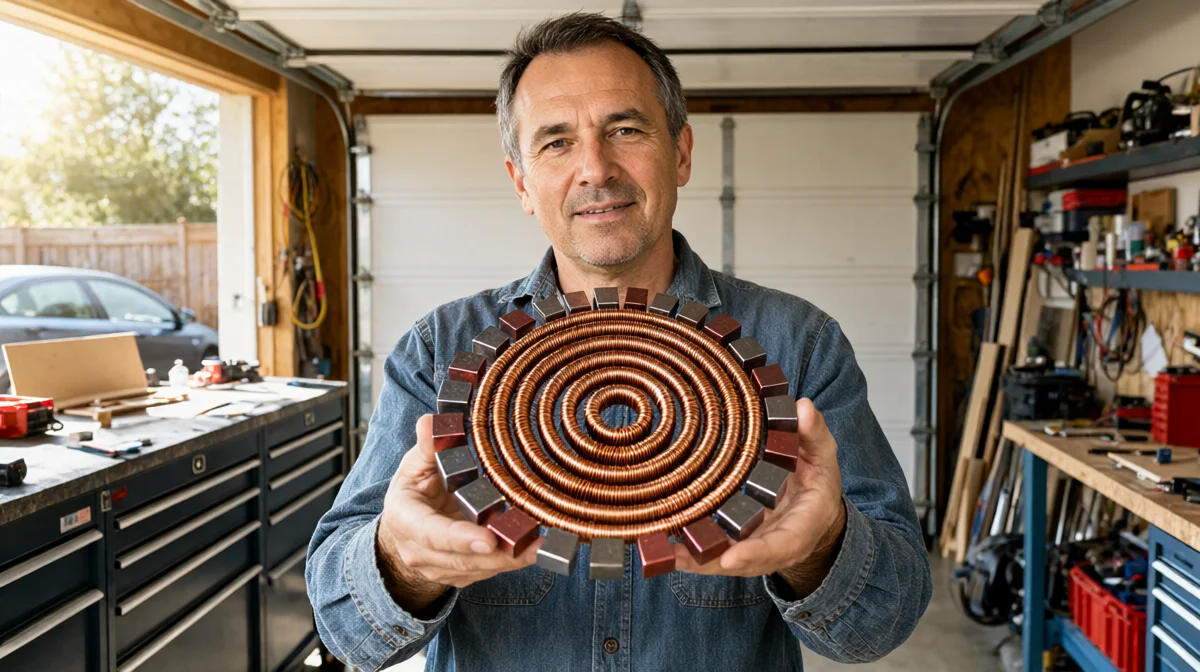
In this comprehensive review, we break down what a Tesla magnetic generator really does, what real users report, and whether it lives up to the hype.
What Is a Tesla Magnetic Generator?
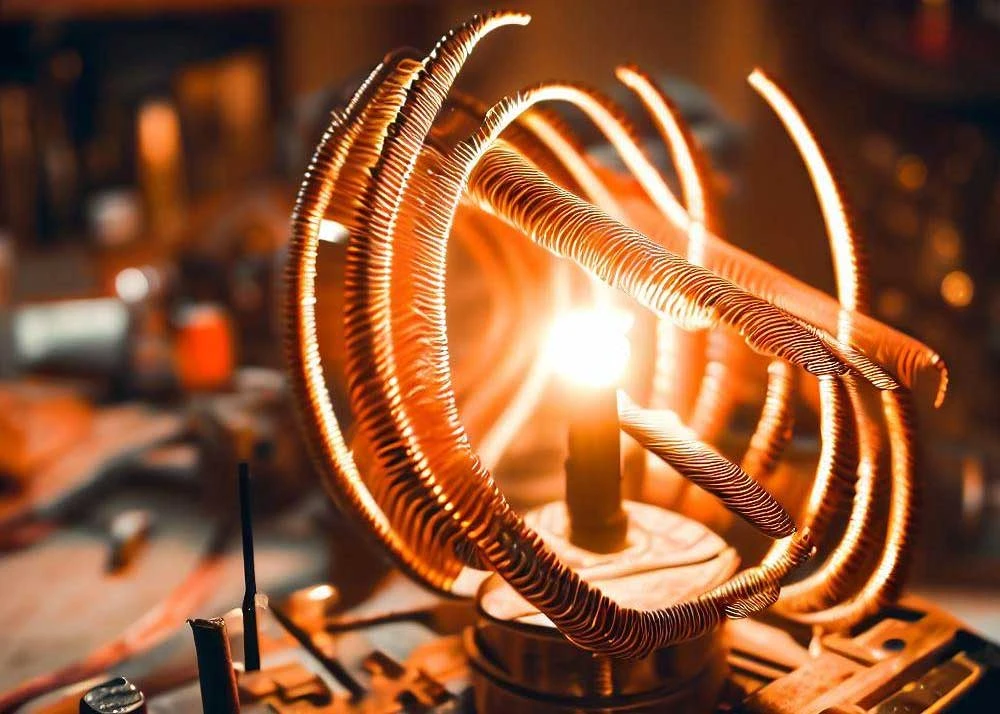
A Tesla magnetic generator is a compact, DIY power device based on Nikola Tesla's Patent No. 512,340, filed in 1893 and granted in 1894. Tesla described a "coil for electromagnets" using a double series winding, essentially two parallel wire windings, arranged as a flat spiral (the famous bifilar pancake coil).
The core idea is that by winding coils in a specific flat spiral pattern, the electromagnetic fields interact in ways that reduce energy loss through self-induction and magnetic field leakage. When rotated or driven by a prime mover, the generator produces electrical energy that some builders claim can supplement or even replace conventional power sources.
How Much Does It Cost to Build?
One of the most compelling aspects of the Tesla magnetic generator is its low entry cost. Most DIY builders report spending between $40 and $200 on materials:
- Neodymium magnets: $20-$60
- Copper magnet wire: $15-$40
- Steel discs or plates: $10-$30
- Bearings and shaft: $5-$15
- Wood or acrylic frame: $5-$15
- Electrical components (rectifiers, capacitors, wiring): $10-$30
Compare this to $14,000-$35,000 for a rooftop solar panel system with battery storage, or $6,000-$11,000 for a whole-house backup generator. The upfront cost difference is staggering.
What Do Real Users Report?
Multiple independent reviewers have built and tested Tesla-inspired magnetic generators:
Manish Dangi (Substack) built the Energy Revolution System and reported: "I'd say it's more like a 'proof of concept' showing how magnetic coils can produce measurable power. It's not going to run your entire house, but it absolutely works."
A homeowner reviewer reported after eight weeks of testing: "My electricity bill dropped from around $140-190/month to $75-90/month. That's about a 50% reduction. Not the 80% some people claim, but still significant."
Another reviewer calculated: "Over a full month, the system saved me approximately $31 on my electricity bill."
Pros and Cons
Pros
- Low upfront cost, $40-$200 vs. thousands for solar or generators
- Silent operation, no engine noise, no exhaust
- Minimal maintenance, no oil changes, no fuel, no spark plugs
- Long lifespan, magnets don't degrade; bearings may need replacement after years
- DIY-friendly, clear blueprints and step-by-step guides available
- Eco-friendly, no emissions, no fossil fuels
Cons
- Modest output, typically 50-300 watts, not enough for whole-home power
- Requires a prime mover, needs wind, water, or manual rotation to generate power
- Not truly "free energy", follows the laws of thermodynamics; you put energy in to get energy out
- Learning curve, building one correctly requires some electrical knowledge
- Variable results, output depends on build quality, magnet grade, and drive mechanism
Is It Worth It?
The answer depends on your goals:
Yes, if you want:
- A supplemental power source for a shed, workshop, or small off-grid structure
- A hands-on DIY project with real-world results
- A low-cost entry into magnetic generator technology
- A silent, emission-free power source for specific applications
Maybe not, if you expect:
- To eliminate your entire electricity bill
- To power a whole house on its own
- A plug-and-play solution with zero building required
Bottom Line
A Tesla magnetic generator is absolutely worth it if you understand what it is and what it does. It's not a magic box that produces infinite energy, it's a well-designed electromagnetic device that converts mechanical energy into electricity using principles Tesla discovered over 130 years ago.
For the price of a few hundred dollars (or even $40 for a basic version), you get a functional generator that produces real, measurable power. Whether it replaces your utility bill depends on your energy needs, but for supplemental power, workshop use, or off-grid cabins, it's hard to beat the value.
Who Should Build One
Who Should Build One
A Tesla magnetic generator is worth it for these people:
Ideal Candidates ✅
- DIY enthusiasts who enjoy hands-on projects with real results
- Cabin owners looking for supplemental power
- RV owners wanting silent, fuel-free power
- Budget-conscious homeowners who want to reduce energy bills
- Preppers seeking reliable emergency backup
- Students learning about electromagnetism
- Eco-conscious builders wanting zero-emission power
Less Ideal Candidates ❌
- People who want plug-and-play: You'll build and maintain it yourself
- Whole-home power on a budget: You'll need a larger system or hybrid
- People who hate tools: Building one requires basic tools
- Those expecting 80% bill reduction: Realistic expectation is 30-50%
The Learning Value
Even if you only build one generator, the knowledge you gain is useful:
- Understanding of electromagnetic induction
- Practical electrical wiring skills
- Mechanical assembly experience
- Problem-solving through trial and error
These skills transfer to other projects, solar installations, wind turbines, electric vehicle conversions, and more.
Upgrade Path: From $40 to $2,000
Upgrade Path: From $40 to $2,000
Most builders start small and upgrade over time. Here's a typical progression:
Phase 1: Basic Test ($40-80)
- Goal: Prove the concept works
- Build: Simple bifilar coil with 8 magnets
- Output: 50-100W
- Time: 4-6 hours
- Lesson: Learn winding, magnet alignment, basic wiring
Phase 2: Mid-Range ($150-300)
- Goal: Meaningful power output
- Build: Larger diameter, more magnets, better bearings
- Output: 200-500W
- Time: 8-12 hours
- Lesson: Optimizing coil design, air gap, prime mover coupling
Phase 3: Professional ($500-1,000)
- Goal: Reliable daily power
- Build: Multi-phase design, laminated core, weatherproof housing
- Output: 500W-1kW
- Time: 16-24 hours
- Lesson: Advanced winding patterns, heat management, power electronics
Phase 4: Custom ($1,000-2,000)
- Goal: Maximum efficiency
- Build: Custom windings, precision components, optimized prime mover
- Output: 1-2kW+
- Time: 30-40 hours
- Lesson: System integration, MPPT charge control, inverter matching
Each phase builds on the last. Your Phase 1 build teaches you what to improve in Phase 2.
Common Myths Debunked
Common Myths Debunked
Let's separate fact from fiction about Tesla magnetic generators:
Myth 1: "It creates energy from nothing"
Reality: A magnetic generator converts mechanical energy to electrical energy. It doesn't create energy, it transforms it. The magnets provide a constant magnetic field; the prime mover provides the input energy. It's electromagnetic induction, the same principle as every generator ever built.
Myth 2: "It's perpetual motion"
Reality: No, it's not. Perpetual motion machines produce more energy than they consume. Magnetic generators consume mechanical energy and produce less electrical energy (due to losses). They follow the laws of thermodynamics perfectly.
Myth 3: "It will power your whole house"
Reality: A single DIY magnetic generator typically produces 100-500W. A typical US home uses about 30,000Wh (30 kWh) per day. You'd need 60-300 generators running 24/7 to power an entire home. But for supplemental power (lights, fridge, charging), one or two generators can cover 30-50% of your needs.
Myth 4: "The magnets lose their strength"
Reality: Neodymium magnets lose about 1% of their strength per 100 years at room temperature. In practical terms, they're permanent for the life of your generator. Heat is the main enemy, keep your generator below 176°F (80°C) for N52 magnets.
Myth 5: "It's a scam"
Reality: The science is solid. The bifilar coil patent is real. Builders worldwide produce measurable power. What's "scammy" are companies selling $5,000 pre-built units. DIY builders get the same technology for $40-300.
The 10-Build Rule
The 10-Build Rule
Here's what most experienced builders know: your first 10 builds will be learning experiences. Here's the progression:
Build #1-3: Learning Phase
- Goal: Get something that produces power
- Output: 50-150W (often less)
- Time: 6-12 hours each
- Key lesson: Magnet alignment and coil winding direction matter
Build #4-6: Optimization Phase
- Goal: Improve output and reliability
- Output: 150-400W
- Time: 4-8 hours each
- Key lesson: Air gap, bearing quality, and prime mover coupling
Build #7-10: Refinement Phase
- Goal: Professional-quality output
- Output: 400-800W
- Time: 2-4 hours each
- Key lesson: Multi-phase designs, heat management, power electronics
After Build #10: You'll be able to build a reliable 500W+ generator in a single weekend. The investment in learning pays massive dividends.
The Compound Effect
Each build teaches you something that makes the next one better. By Build #5, you'll likely have a generator that powers your shed or cabin. By Build #10, you could have a system that covers 50%+ of your home's power needs.
Ready to build your own? Check out our guides on magnetic generator plans and how much it costs to build, or explore our beginner's step-by-step guide.