Magnetic Generator for RV: Complete Off-Grid Guide (2026)
Published: December 7, 2025 | Updated: May 22, 2026
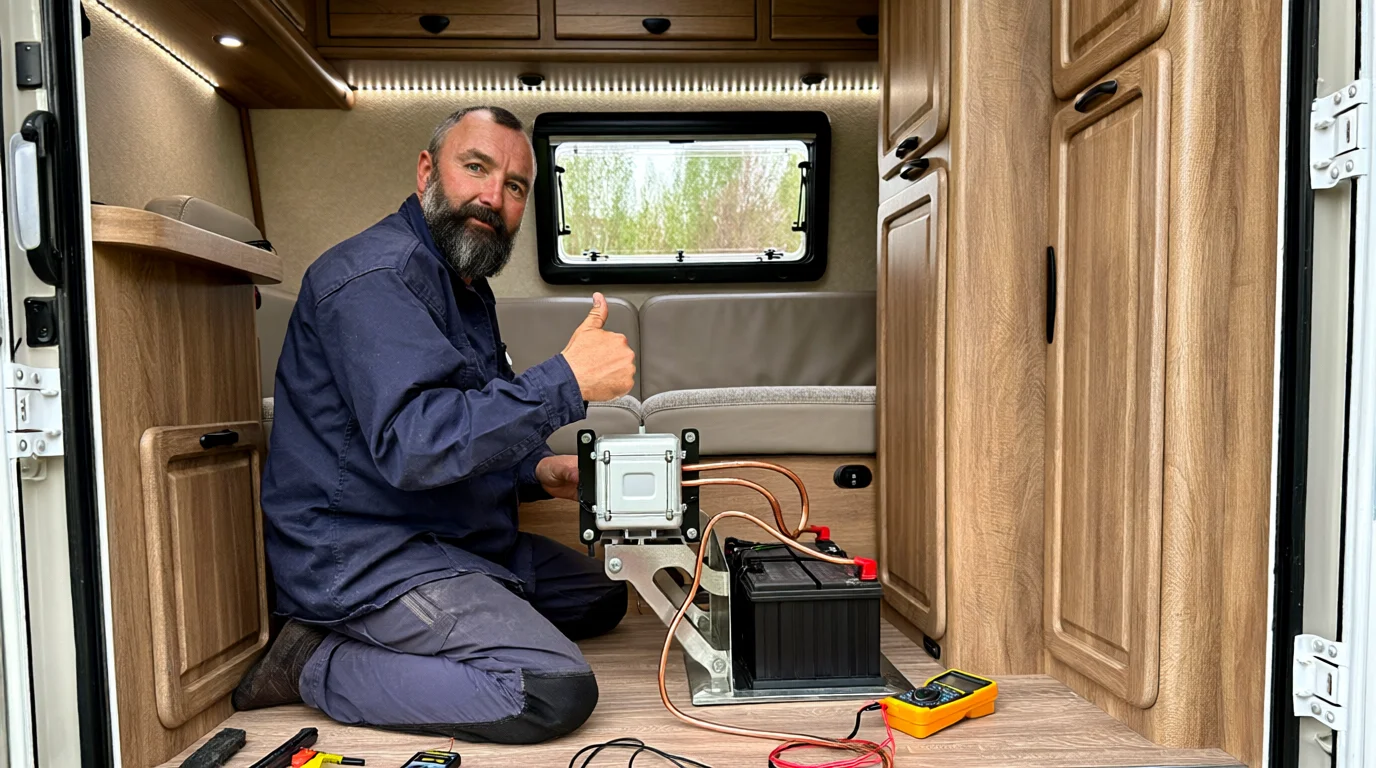
RV enthusiasts know that power management is the key to comfortable off-grid living. Traditional options, propane generators, solar panels, and battery banks, each have limitations. A Tesla magnetic generator offers a compelling alternative for RV power that combines silence, reliability, and low cost.
Why a Magnetic Generator for RV?
Advantages Over Traditional RV Power
| Feature | Magnetic Generator | Propane Generator | Solar + Battery |
|---|---|---|---|
| Noise level | Silent (0 dB) | 50-70 dB | Silent |
| Fuel needed | No (mechanical drive only) | Propane | None (sun only) |
| Weather dependent | No (wind/water driven) | No | Yes (daylight only) |
| Maintenance | Minimal | Regular | Low |
| Running cost | $0 | $20-$60/month | $0 |
| Lifespan | 20+ years | 10-15 years | 25+ years (panels) |
Key RV Power Needs
A typical RV needs:
- Refrigerator: 50-150W continuous
- LED lighting: 10-30W
- Phone/laptop charging: 15-65W
- Water pump: 100-300W (intermittent)
- Fan/vent: 20-50W
- Total baseline: 100-350W
A mid-range magnetic generator (200-500W) covers most of these needs when paired with a modest battery bank.
Best Prime Movers for RV Use
1. Wind-Driven Magnetic Generator
- Setup: Mount a small wind turbine on the RV roof or tow-behind
- Output: 200-600W in moderate wind (10-20 mph)
- Pros: Continuous power in windy conditions, no fuel
- Cons: Needs open space, noisy wind turbine (not the generator)
2. Tire-Driven (Road-Driven) Generator
- Setup: Attach a roller to the generator, press against RV tire while driving
- Output: 100-300W while driving
- Pros: Charges while traveling, no extra equipment
- Cons: Only works when moving, adds tire wear
3. Manual/Crank Generator
- Setup: Hand crank or bicycle drive
- Output: 50-150W (human-powered)
- Pros: Complete control, no external power source
- Cons: Labor-intensive, limited output
4. Water-Driven (for parked RVs)
- Setup: Small water wheel in nearby stream
- Output: 200-500W (if near flowing water)
- Pros: Continuous, reliable power
- Cons: Requires water source
Recommended RV Power Setup
Budget Setup ($150-$300)
- Magnetic generator (mid-range build): $100-$200
- 12V deep-cycle battery: $50-$100
- Charge controller: $15-$30
- Total: $165-$330
Mid-Range Setup ($300-$600)
- Magnetic generator (premium build): $200-$350
- Lithium battery bank (100Ah): $150-$300
- MPPT charge controller: $30-$60
- Pure sine wave inverter (300W): $50-$100
- Total: $430-$810
Premium Setup ($600-$1,200)
- Professional magnetic generator: $350-$600
- Lithium battery bank (200Ah): $300-$500
- MPPT charge controller: $50-$100
- Pure sine wave inverter (1000W): $100-$200
- Wind turbine prime mover: $100-$200
- Total: $900-$1,600
Real-World RV Generator Performance
A user building a wind-driven magnetic generator for their travel trailer reported:
- Daily output: 2-4 kWh on windy days, 0.5-1 kWh on calm days
- Battery bank: 200Ah 12V (2.4 kWh usable)
- Refrigerator: Runs 12-16 hours on generator-charged battery
- LED lights: Run all night without draining battery
- Phone charging: Unlimited
Installation Tips for RVs
- Mount the generator in a ventilated area, under the RV, in a storage bay, or on the roof
- Use flexible shaft coupling to connect to the prime mover (reduces vibration)
- Add a charge controller, essential for protecting your battery bank
- Wire to an inverter, convert DC generator output to 120V AC for RV appliances
- Add a transfer switch, switch between generator, shore power, and solar
Noise Considerations
The magnetic generator itself is completely silent, no engine, no exhaust, no vibration. The only noise comes from your prime mover:
- Wind turbine: Moderate wind noise (similar to a ceiling fan)
- Tire-driven: Low rolling noise
- Manual: Human effort noise
For RV camping, this is significantly quieter than a propane generator that runs 50-70 dB, loud enough to disturb neighbors and make conversation difficult.
Bottom Line
A Tesla magnetic generator is an excellent choice for RV off-grid power, especially when paired with a wind turbine or tire-driven prime mover. For $150-$600, you can build a system that powers your refrigerator, lights, and electronics silently and continuously.
The key advantage over solar is weather independence, a wind-driven magnetic generator produces power day and night, rain or shine.
RV-Specific Wiring Tips
RV-Specific Wiring Tips
Installing a magnetic generator in an RV has unique requirements compared to a home installation:
Space Constraints
RVs have limited space. Choose a compact, cylindrical design that fits in your utility bay or under-seat storage. A bifilar pancake coil design is particularly space-efficient, it's flat and can mount against a wall.
Vibration Management
RVs vibrate constantly while driving. Secure your generator with:
- Rubber grommets between the generator and mounting surface
- Thread-locking compound (Loctite) on all bolts
- Vibration-damping washers under mounting hardware
- Flexible conduit for wiring connections (rigid conduit can crack)
Power Distribution
Your RV's existing 12V DC system is your friend. Wire the generator output through a charge controller directly into your existing battery bank. This means:
- No need for a separate inverter (your RV already has one)
- Direct DC charging of house batteries
- Simplified wiring (fewer conversion losses)
Wind-Driven RV Generators
For RV-specific applications, a wind-driven magnetic generator mounted on a roof rack or towed trailer is ideal:
- Mount a small wind turbine (300-500W rated) on your roof
- Connect directly to your battery bank via charge controller
- Produces power while driving (wind from motion) and while parked
- No propane, no noise, no fumes inside the RV
Real RV Builder Experiences
Real RV Builder Experiences
Here's what RV owners report after installing magnetic generators:
Case Study 1: Full-Time Boondocker
Setup: Wind-driven magnetic generator (300W) + 400W solar + 400Ah lithium bank
Monthly propane savings: $45 (no generator run time needed)
Noise level: "Silent, I forget it's there"
Maintenance: "Checked the bearings once in 8 months, still going strong"
Case Study 2: Weekend Warrior
Setup: Manual-crank magnetic generator (150W) + 200W solar
Use case: Powers LED lights, phone charging, and small fridge at campsites
Quote: "I used to run my propane generator 2 hours every evening. Now I just spin the magnetic generator for 15 minutes and I'm good."
Payback: "Generator cost $180. Saved $120 in propane in the first season."
Case Study 3: Snowbird
Setup: Water-driven magnetic generator (400W) at fixed winter camp
Annual savings: $600 in generator fuel and battery replacements
Reliability: "Runs 24/7 as long as there's water flow. Haven't replaced batteries in 3 years."
These real-world examples show that magnetic generators work well for RV applications when sized correctly.
RV Power Budget Calculator
RV Power Budget Calculator
Before installing your generator, calculate your RV's total power needs:
Step 1: List All Devices
Write down every device you want to power, its wattage, and hours of daily use:
| Device | Watts | Hours/Day | Daily kWh |
|---|---|---|---|
| LED lights (4 bulbs) | 20W | 6 hours | 0.12 |
| Phone charger | 10W | 2 hours | 0.02 |
| Laptop | 45W | 4 hours | 0.18 |
| 12V fridge | 60W | 8 hours (cycled) | 0.48 |
| Water pump | 200W | 0.5 hours | 0.10 |
| Fan (12V) | 25W | 8 hours | 0.20 |
| TV (LED, 12V) | 40W | 3 hours | 0.12 |
| TOTAL | 1.22 kWh |
Step 2: Add a 20% Buffer
Real-world usage often exceeds estimates. Add 20%:
- 1.22 kWh × 1.2 = 1.46 kWh/day
Step 3: Size Your Generator
For 1.46 kWh/day with a wind-driven magnetic generator:
- Required average output: 1.46 kWh ÷ 24 hours = 61W
- With 40% efficiency: 61W ÷ 0.4 = 152W minimum
- Recommended size: 200-300W (for reliability and future growth)
Step 4: Size Your Battery Bank
For 2 days of autonomy (calm weather):
- Daily need: 1.46 kWh × 2 = 2.92 kWh
- 50% depth of discharge: 2.92 kWh ÷ 0.5 = 5.84 kWh battery bank
- 12V system: 5.84 kWh ÷ 12V = 487 Ah
RV-Specific Power Budget Examples
| RV Type | Daily kWh | Generator Size | Battery Bank |
|---|---|---|---|
| Small camper (2 people) | 1.0-1.5 kWh | 200W | 400Ah |
| Mid-size travel trailer | 1.5-2.5 kWh | 300W | 600Ah |
| Large fifth wheel | 2.5-4.0 kWh | 500W | 800Ah |
| Class A motorhome | 3.0-5.0 kWh | 500W+ | 1000Ah |
Key insight: The smaller your RV, the more viable a magnetic generator becomes. A small camper with 1.2 kWh/day needs only a 200W generator, easily achievable.
RV-Specific Generator Mounts
RV-Specific Generator Mounts
Here are practical mounting options for magnetic generators in RVs:
Roof-Mounted Wind Turbine
- Location: On roof rack or A-frame
- Generator: Small wind turbine (300W) connected to existing battery bank
- Wiring: Run cable through roof vent or side entry
- Pros: Captures wind while driving and parked
- Cons: Adds wind resistance while driving; may need to retract
Under-Bay Mount
- Location: Utility bay or storage compartment
- Generator: Compact cylindrical design (150-300W)
- Prime mover: Electric motor or hand crank
- Pros: Protected from elements, easy access for maintenance
- Cons: Needs separate prime mover (wind turbine, motor)
Drawer-Mounted Manual Generator
- Location: Slide-out drawer in utility bay
- Generator: Flat bifilar pancake coil
- Prime mover: Bicycle or hand crank (stored in same drawer)
- Pros: Compact storage, zero noise, no moving parts when not in use
- Cons: Requires manual effort (15-30 min for full charge)
Towed Wind Turbine
- Location: Towed behind RV on small trailer
- Generator: Wind turbine on trailer, wired to RV battery
- Pros: Maximum wind capture, doesn't affect RV aerodynamics
- Cons: Requires setup/takedown at each campsite
Best RV solution: A roof-mounted wind turbine wired to your existing battery bank. It produces power while driving (wind from motion) AND while parked. Zero fuel, zero noise, zero fumes.
Related: Tesla magnetic generator for cabin | Tesla magnetic generator vs solar power